Showing posts sorted by date for query Android Software. Sort by relevance Show all posts

Thursday, 2 June 2016

Xiaomi Mi Band 2 launched with OLED display, heart rate sensor


Xiaomi has finally launched its widely-speculated Mi Band 2. Priced at CNY 149 (Rs 1500 approximately), the tech firm will be making the wearable device available to buyers starting June 7. The company has not yet revealed when the band will be launched in India and at what price.


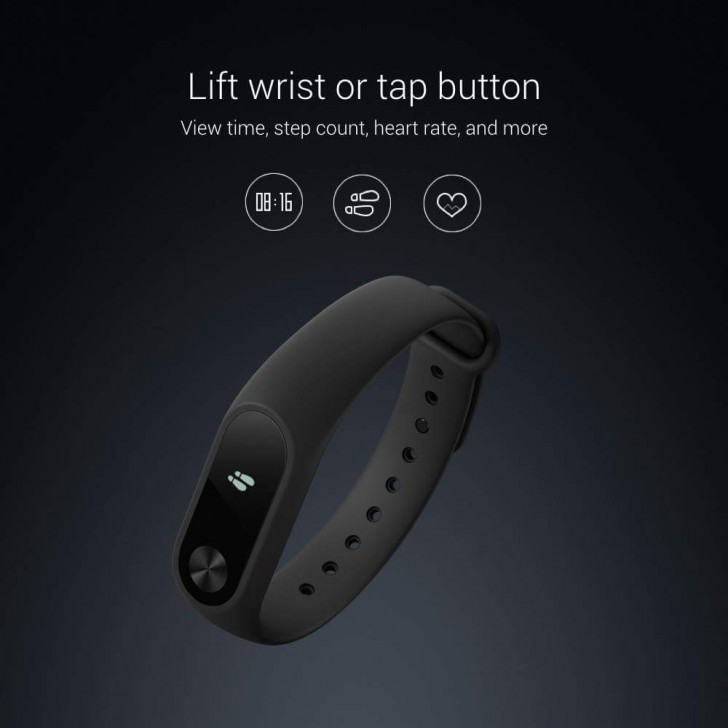
The Xiaomi Mi Band 2 features a 0.42-inch OLED display that shows health information along with other stats, a heart rate monitor and other functionalities. The fitness band , as tweeted by the company's global vice president Hugo Barra, can run for 20 days on a single charge.


Besides a hear rate sensor, the Mi Band 2 tracks the wearer's sleep and counts the steps taken using the updated pedometer. It sports a hypoallergenic silicone band and is IP67 rated that makes it water resistant as well.

According to the company, Xiaomi Mi Band 2 features a military-grade ADI accelerometer, an anodized 0.05mm button on top of the oval display to move through different menu options, and second-generation Bluetooth v4.0. The new Mi Band will also be showing smartphone notifications on display and will give a vibration alert like its predecessor.


The band weighs 7 gram and will be available in Black, Blue, Green, and Orange colours. It can sync with smartphones running on Android 4.4, iOS 7 and later versions.


Xiaomi recently sealed a deal to buy 1500 patents from software giant Microsoft Corp. The deal not only features patent cross-licensing but also requires Xiaomi to sell its upcoming handsets and tablets with Microsoft-branded software including the Office and Skype. The two companies, however, did not disclose the financial terms of the deal.

Thursday, 26 May 2016

LeEco to launch Le 2, Le Max 2 smartphones in India on 8 June

After the grand launch of its new range of Superphones in China, LeEco is now gearing up for the launch of some of those smartphones in India. The short list includes just its budget Le 2 smartphone, and the phablet-sized Le Max 2 that are set to launch in India on 8 June.
LeEco 8 June Invite
Le 2:
The Le 2 is the successor to the hugely popular Le 1s that broke plenty of sales records earlier this year. The budget Le 2 sports an all metal construction and features a 5.5" Full HD display (403ppi). It is powered by 2.3GHz MediaTek Helio X20 chipset with 3GB RAM and 32GB of internal storage. The handset comes with a 16MP rear camera and an 8MP front facing camera. The device have Android 6.0 Marshmallow with the company’s EUI 5.8 software and a fingerprint reader that is placed on the back
Le Max 2:
Next up is the Le Max 2 that is the successor to the monstrous Le Max phablet that we reviewed earlier this year. The phablet packs in a 5.7" QHD display. It is powered by 2.5GHz Qualcomm Snapdragon 820 chipset and a massive 6GB of RAM in the higher priced version that also sports 64GB of internal storage. The handset comes with a 21MP rear camera and 8MP front camera. The device is  powered by a 3100mAh battery. At the China launch, the smartphone was also announced in a lower priced variant that featured 4GB of RAM along with 32GB of internal storage. The device have Android 6.0 Marshmallow with the company’s EUI 5.8 software and a fingerprint reader that is placed on the back
LeEco is expected to package the its USB Type C powered headphones along with its Superphones.

Saturday, 21 May 2016

Yu announces Project Highway, Marshmallow for Yureka and other phones

On Friday evening the company formally announced its in-house project to create better software for Yu phones. The company also said that starting today beta builds of Android Marshmallow, which are the result of the Project Highway, are available for four Yu phones.
These phones are Yureka, Yureka Plus, Yunique and Yuphoria. The Yutopia, which was launched a few months ago, is the odd-one out.
"Developers and contributors have been special to us. When we rolled out Project Highway, we wanted to get as many people on board as possible. Pleased to share that developer.yuplaygod.com is live as of NOW and happy to share today we are making available the open-sourced OS for (four Yu phones)," Yu founder Rahul Sharma wrote on the company's official user forum.
As we had written earlier, the Project Highway will give Yu ability to cook up unique software for its phones, especially now that the company's exclusive partnership with Cyanogen Inc is over. While the base of the Project Highway software will be stock Android, Yu will add several features to it. The most significant of these features is going to be the Around Yu.
At the same time, says Yu, the company will try to keep the look and feel of the software close to pure Android. For Yu, the Yunicorn that was supposed to launch on May 20 was likely to be the first phone running Project Highway software. But the launch of the phone was pushed forward. Now, it is slated to come to the market on May 31.
"Under Project Highway we will be curating source codes from multiple drop points, such as Google's AOSP repos, Chipset Vendors Repos, Various ROMs (where the community developers contribute), Internal YU customisation... and creating one manifest which will be able to support all YU based devices," wrote Rahul.
He said that the stable builds of the Marshmallow based Project Highway software will be available for various Yu phone in the next 30 days. 


Friday, 20 May 2016

Smartron t.phone with Snapdragon 810, 4GB RAM launched in India at Rs 22,999

Smartron Unveils tphone Smartphone at Rs 22,999 With Sachin Tendulkar As Brand AmbassadorIndian IoT brand Smartron has finally launched its much-awaited t.phone in India for a price tag of Rs 22,999. The smartphone packs in premium hardware and will be exclusively available at gadgets360.
The Smartron t.phone features and all metal body that is available in Sunrise Orange, Classic Grey, Metallic Pink and Steel Blue.  Smartron claims that the t.phone is one of the lightest smartphones in its category. On the front, owners will be treated to a 5.5" Full HD AMOLED display sporting a pixel density of 401PPI that is protected by Corning’s Gorilla Glass 3 and features a fingerprint resistant oleophobic coating. Inside, we get a 64-bit 1.6GHz Qualcomm Snapdragon 810 chipset paired with 4GB of LPDDR4 RAM. There’s 64GB of internal storage and also features a microSD card slot for storage expansion.
Smartron T Phone Front Orange
Coming to the camera’s, the t.phone comes with a 13MP rear camera with a 6P lens and f/2.0 aperture. The camera unit also features PDAF for quick autofocus and dual LED flash unit. Protecting the camera lens is a lens cover made from Gorilla Glass. The front-facing camera is a 4MP sensor with bigger pixels and an f/2.0 aperture. The front facing lens also get a Gorilla Glass lens cover for protection.
Smartron T Phone Front Side Orange
The handset packs in barrage of sensors including a barometer, 9-axis sensor hub, a proximity sensor, ambient light sensor and a hall sensor. It also packs in 4 mics and features active noise cancellation. We get the usual connectivity options Wi-Fi 802.11 a/b/g/n/ac, Bluetooth v4.1, 4G LTE bands, GPS GLONASS and USB 3.0 Type-C connector that lets you use Quick Charge 2.0 tech to charge the 3000mAh battery.
Coming from Smartron, the handset runs Android Marshmallow and packs in some software goodies like t.store, t.cloud and t.care.
At the launch of the Smartron t.phone, founder and chairman, Mahesh Lingareddy said, “In the next two to three years we will bring all manufacturing facilities to India. We want to add manufacturing capability to our portfolio. There is tremendous interest in t.book and t.phone in markets beyond India. We are getting enquiries from Russia and SE Asia. We want to eventually sell globally.” Commenting on why they did not go the flash sales way, “We have no concept of flash sale. We have a fixed price and we are prepared to support whatever the demand is.”
Smartron T Phone Back

Thursday, 17 March 2016

Creo Mark 1 Android smartphone promises monthly software updates & features you’ve never seen before!

CREO (rebranded Mango Man Consumer Electronic aka Teewee streaming dongle makers), has put out a teaser for its own smartphone called Mark 1 promising an OS update every month.

It was reported in January that CREO had secured a $3 million funding from Sequoia India, Beenext Ventures and India Quotient to produce smartphones and develop a proprietary software OS.

CREO’s note about the Mark 1 reads, “At CREO, we’re committed to #MakeBetter Android. And because we want to leave no stone unturned, we’re building both, the Operating System and the Smartphone. With our OS, we’ll send to our users super relevant updates that’ll keep Mark 1 running as just new.”

The company says they will ship a big new feature with every update based on ideas and suggestions given by Mark 1’s community of users. CREO has not yet revealed the specs or other details about their Mark 1 smartphone and their new ‘OS’.


One of the issue with Android is, of course, the lack of an upgrade to the next level of OS for most smartphone users. We know that to some extent this is because every update for Android running Google Play services needs to certified and verified by Google, before it can be rolled out to users. Plus, updates require months of testing to keep out security flaws.

We’ll have to wait and see how CREO manages to roll out regular updates for its ‘OS’, which is technically still an Android as they themselves confess. So calling it an OS would be a bit of stretch, although developers can do that, even though it is a skin at the end of the day with Android at the core.

We’ve seen Chinese players like Xiaomi, OnePlus roll out regular updates for their UIs adding their own new features, so regular updates from manufacturers aren’t exactly revolutionary. Even in India, Lava’s Xolo launched Hive which was pushing updates requested by users in the community.

So it is not even the first Indian company to focus on updates.


OnePlus 2 users will get Android 6.0.1 based OxygenOS 3.0 update


OnePlus has started the soak test of the Android 6.0 Marshmallow-based build of its OxygenOS for the OnePlus 2 smartphone. Soak test means seeding the update to only a few users in order to identify issues with the software build and iron them out before the wider rollout.


Screenshots shared by a user with Android Police show the Android 6.0.1 based OxygenOS 3.0 update for OnePlus 2, the last update the smartphone received was named OxygenOS 2.2.1.

Among the new features that OxygenOS based on Android 6.0 will bring to OnePlus 2 are new wallpapers, UI tweaks, alert slider and more homescreen customization options, among others.


There is no official word yet on how long OnePlus will continue the soak test.


The smartphone received a price cut recently, bringing the prices of the 16GB and 64GB variants down to Rs 20,999 and Rs 22,999, respectively.

Stagefright Returns: Android smartphones at risk via videos


Researchers at Israeli software firm NorthBit have claimed to have exploited a newly found Stagefright bug to hack a into Android smartphones remotely.


This comes within an year after the first Stagefright bug was discovered by cybersecurity firm Zimperium Mobile Security in July 2015. It highlighted that Android smartphones could be hacked remotely by specially crafted media file delivered via MMS.


Later in October 2015, another exploit was discovered which allowed remote execution of malicious code in smartphones via .mp3 and .mp4 files.


The new exploit implementation, termed Metaphor, has been successfully tested on Nexus 5, LG G3, HTC One and Samsung Galaxy S5, according to the company's detailed research paper.


Stagefright is an Android operating system multimedia library based on C++ language. The victims can be lured to websites with a malicious video file that is capable of crashing it. Google had released a patch for the earlier vulnerabilities but it is yet to acknowledge this newly found 'Metaphor exploit'.


The NorthBit research paper depicts a way to bypass Address Space Layout Randomisation (ASLR). The researchers have claimed to create a 'working exploit' while bypassing ASLR on versions 5.0 - 5.1, which affects Android versions 2.2 - 4.0 as well. The report noted that Android versions 2.2 - 4.0 do not come with the ASLR memory protection process.

"Breaking ASLR requires some information about the device, as different devices use slightly different configurations - which may change some offsets or predictable addresses locations," the paper said.


Explaining the payload, the paper said, "It is possible to gain arbitrary pointer read to leak back to the web browser and gather information in order to break the ASLR".

Around 235 million Android smartphone run Android 5.0- 5.1 while another 40 million smartphones still run Android 2.x without ASLR.

Friday, 12 February 2016

Qualcomm unveils new Snapdragon processors for smartphones


Qualcomm has unveiled new Snapdragon processors, which will be primarily used in low-to-mid-range smartphones. The processors in question are the Snapdragon 425, 435 and the 625.

The Snapdragon 625 features some advanced features that are usually found in Qualcomm's Snapdragon's 800 series of processors. For instance, Qualcomm touts a 4K HEVC camcorder support for up to 24-megapixel camera sensors, unlike the 13-megapixel cap on the Snapdragon 617. It also comes with the new Adreno 506 GPU. Other than this, the processors will consume 35 per cent less battery life. Qualcomm claims that battery life improvements could convert to an added 6 hours of usage.
The Snapdragon 435 is an enhancement of the Snapdragon 430, which now features X8 LTE modem with Cat 7 speeds. Other than that, it can support 21-megapixel cameras, 1080p displays and also has the Adreno 505 GPU.
The Snapdragon 425 is the base model of the Snapdragon 400 family of processors and will act like the successor to the Snapdragon 410. It gets a X6 LTE modem, dual ISPs for 16-megapixel camera sensors and the Hexagon DSP.
All the processors also support technologies like LTE carrier aggregation, support for Wi-Fi 801.11ac with MU-MiMo and dual camera ISPs, sensor requirements for Android Marshmallow and also Qualcomm's quick charge technology.
"The Snapdragon 435, 430, and 425 are all pin-compatible and software-compatible, and the Snapdragon 625 is also software-compatible. These processors are expected to power smartphones available in the second half of 2016. For more specifications and details, check out the press release, product pages, and product briefs," said Qualcomm's Adam Kerin.
Along with these processors, the San Diego-based company also announced the Snapdragon 2100 processor, which is mainly meant for wearables, with a particular focus on smartwatches.
Soon, we will soon start seeing smartphones with Qualcomm's flagship chipset the Snapdragon 820. Samsung's Galaxy S7, the HTC One M10, the LG G5 and also the Xiaomi Mi 5 are expected to feature the processor. All these phones are expected to be announced later this month at Mobile World Congress (MWC) in Barcelona, Spain.

Thursday, 4 February 2016

Yu Rolling Out OTA Software Update for Yutopia

Yu Televentures on Thursday announced it is rolling out an over-the-air (OTA) software update for its flagship smartphone, the Yu Yutopia. The update brings a few security-focussed changes to the smartphone.

The entire list of changes that the Yu Yutopia software update brings, as listed by the company, are mentioned below:
  1. The fingerprint reader now allows for five attempts. Previous version only allowed for three.
  2. When the user reaches five failed attempts the fingerprint reader will time out for 15 seconds. The user will feel multiple vibrations from the reader on the final failed attempt letting them know to unlock their device.
  3. After 15 seconds the user can again attempt to unlock the device with the finger print sensor.
  4. After 5 unsuccessful attempts user can unlock the device with Password/ PIN.
The update carries version number YOG4PAS5W0 (Cyanogen OS version: 12.1, Android OS version: 5.1.1).

Yu Yutopia is made with aircraft-grade aluminium and sports a 5.2-inch QHD (1440x2560p) Sharp OGS TP OGS display, with a 565ppi pixel density. It is powered by Qualcomm's Snapdragon 810 SoC (2GHz Cortex-A57 quad-core coupled with 1.5GHz Cortex-A53 quad-core), coupled with the Adreno 430 GPU and 4GB of LPDDR4 RAM. On the storage front, it has a 32GB inbuilt memory, with expandable storage via microSD card up to 128GB.

On the photography front, the Yu Yutopia has a Sony-made 21MP rear camera (Exmor RS IMX230 sensor) with true tone dual-LED flash, a 5P lens, and OIS, apart from an 8MP front-facing camera also with a 5P lens. The rear camera can shoot 4K videos. The dual-SIM (Micro-SIM and Nano-SIM) capable Yu Yutopia supports 4G LTE, 3G, Wi-Fi, and other standard connectivity features. It bears a 3000mAh battery, with Quick Charge 2.0, capable of reaching from 0% to 60% charge in 30 minutes.

Friday, 22 January 2016

Android N is Nutella or Nougat? Features Revealed...

Following the trend of naming Android updates with desserts by alphabetical order, Google’s Android N is going to be the successor to Android Marshmallow.
Android enthusiasts are fascinating over what name the ‘N’ will stand for even though Android M has not been updated by a lot of users. If one has to go by the rumors, the name is likely to be Nutella and here is the list of features and changes that might come with it.
The first feature that Android N is rumored to have is Multi-Window feature. Andrew Bowers from Google said that “we’d spoil the surprise of N if we shared all of them. Split screen is in the works!” Currently, it is said that multi-window is a “highly experimental” feature in Marshmallow, but Google is working on improving it and it will be officially released, it will be pushed to the Android tablets. If this happens, not only will it be useful for larger Android devices, but also pit against Apple’s iPad and their new software features.
The second feature might be a New Messaging Application, but it’s unclear whether or not this means that Hangouts will be pushed aside in order to make room for “Messaging”, the application which already reached India and parts of Africa and it’s competing against WhatsApp and Facebook Messenger. The Wall Street Journal has reported a number of times that this “new” messaging app would be smarter and more like a blending of Hangouts and Google Now, with answers available for whatever people ask it.
The third and most important change will affect Chrome OS, as it has been rumoured that the two operating systems will become one with Chrome folded into Android. This is something Google has apparently been working on for a long time and, while it has recently made some progress, the single OS isn’t expected to be ready until 2017, making it more likely that if any Android OS is to kill off Chrome OS it will be Android 8.0 “O”. For now the company has confirmed that both operating systems will continue to exist.
But Google wants to do more than put Android on more devices, Lockheimer revealed during his Fast Company interview. Google wants smart Android devices to talk to each other better in order to offer new features that right now aren’t possible. In terms of actual new features in Android N it’s a bit too early too tell, especially given that most Android users are still waiting for the Marshmallow upgrade. However, we will continue to update this article until Android 7.0 N’s release, including new rumours and information as we hear it.
Android N is expected to get its first outing at Google I/O 2016, which has now been confirmed to run between May 18, 2016 to May 20, 2016. Google will offer an Android N Developer Preview, which you will be able to install on its 2016 line of Nexus devices.

Monday, 18 January 2016

BlackBerry to launch its first Android smartphone Priv in India on January 28


The wait for BlackBerry's first Android smartphone in India is over. The Canadian smartphone giant is all set to launch BlackBerry Priv smartphone in the Indian market this month.


The company has sent invites for the launch event scheduled to be held in New Delhi on January 28.


BlackBerry Priv has a 5.4-inch QHD touchscreen and is powered by Qualcomm's Snapdragon 808 SoC. It packs 3GB RAM, 32GB of expandable storage and a 3410mAh battery. On camera front, the smartphone has a 2 MP selfie camera and 18MP shooter at the back with OIS, phase detection autofocus and a dual-tone LED flash.


BlackBerry Priv runs on Android 5.1 Lollipop.

The company's CEO John Chen recently also hinted that it may launch its second high-end Android smartphone in 2016.


Ontario-based BlackBerry also recently closed the acquisition of rival mobile software provider Good Technology Corp, which it bought for $425 million to boost its ability to help corporate clients manage smartphones running on different operating systems.

Sunday, 10 January 2016

Here is how you can use your Android smartphone as Remote Mouse and Keyboard for your PC

Before we begin, you must know this “this process will only work with Intel based PCs”. Now first of all you have to get Android Remote Keyboard App and software.
How to Set Up Intel Remote Keyboard:
  • Download and install the Intel Remote Keyboard Host on your Windows PC. You will need to choose x86 or x64 depending on your Windows. If you aren’t sure what you are running, there are four easy ways to know if you’re on 64-bit Windows.
  • (Important: Make sure your Android and Windows devices are connected to the same Wi-Fi network.)
  • On your Android phone, tap the Windows device name.
  • Your Windows PC will now show a large QR code. Just scan it with your Android smartphone’s camera (following the on-screen instructions) and the two devices will be paired.
  • You’re all set!

What you can do:
The App is basically a virtual trackpad and keyboard for your computer. You can use it in portrait or landscape mode.
How to use Android as keyboard or mouse for PC
In portrait mode, your screen is divided into the trackpad area on the top and keyboard at the bottom. Intel’s keyboard looks much like any Android keyboard, but also has a Windows button, an Esc button, and the four arrow keys.
How to use Android as keyboard or mouse for PC

Stuff which should have been there:
There could be some enhanced controls to fully optimize the facility. First, there is no “continuous scrolling” , that means you have to touch scroll button many times for scrolling upto a large distance. Second there is no “direct volume control” , since it is always convenient to adjust volume by using a dedicated key than to use mouse. We firmly expect that these features will be added in the upcoming updates.

Saturday, 9 January 2016

iPhone 4S now available for Rs.9,999 but don't buy it...

If you are hoping to buy an iPhone but don't want spend more than Rs.10,000, now you can. The iPhone 4S (16GB) is available for Rs.9,999. But there is a catch. Or rather not one but a few. The iPhone 4S that you can buy for Rs.9,999 is an open box or refurbished phone, available from GreenDust. This means it is not strictly new, although you can't also call it used.
GreenDust, meanwhile, describes itself as "India's largest and most trusted online store to sell open-box, refurbished, factory seconds, and surplus products" so you can definitely trust it. However, the problem is that even though you would be getting the iPhone 4S for less than Rs.10,000, you are not getting it from Apple. And that means it has implications.
GreenDust says that the iPhone it is selling is as good as a sealed unit sold by Apple. "The phones that will be sold, would either be seal-opened but unused, or have some software issues which are fixed by GreenDust, hence would be a certified product of the company," says the company. To assure consumers who buy the phone, the company would also offer six months warranty on the units it is selling.
The problem, however, is that even with a fairly tempting price for an iPhone, that is the iPhone 4S is not the phone you should be buying in 2016. Even if it was new, sealed unit, it is not a good buy despite its appealing price tag.
The iPhone 4S is a phone that was released in 2011. That is almost five years ago. It is an OLD phone with technology that is now old. In fact, it was officially discontinued by Apple in 2014. And while iOS 9 supports the iPhone 4S, there are reports that the software update makes it slow instead of making it better. The iPhone 4S is so old that we suspect that this year, when Apple comes out with the iOS 10, the iPhone 4S would not be eligible for the next software update.
The only reason to buy an iPhone 4S from GreenDust would be if you absolutely, positively, want the iPhone at this price point, irrespective of the experience that it would offer. We say this because on the Android side, newer phones like the Motorola Moto G3 and Lenovo K3 offer better performance in almost every aspect compared to the iPhone 4S. Now, it is possible that you are looking for a more compact, more easy to use option, in which we would suggest something like the Xiaomi Mi 4i in a price range that is similar.The iPhone 4S, even at a price of Rs.9,999, is not a great deal.

Sunday, 22 November 2015

Obi Worldphone SF1 coming to India; to be priced around Rs 15000

Obi Worldphone, which is backed by former Apple CEO John Sculley, is planning to soon launch its new smartphone the Obi SF1 in India. While the company is yet to reveal the launch date, it has confirmed that the phone will be introduced in India this month.
According to the company, the SF1 smartphone will be priced in India at around Rs 15,000. The phone, therefore, will compete with the likes of the Xiaomi Mi 4i, Moto G (3rd generation), OnePlus X, and the Asus Zenfone 2.
Obi Worldphone currently has two affordable Android phones SF1 and SJ1.5 in its smartphone portfolio, but the company is bringing only one phone this month to India.
"Obi Worldphone SF1 is set apart by iconic industrial design complimented with the Obi Lifespeed, a custom user interface for Android that unifies the software and hardware experience." says the company.
Featuring a unibody design, the Obi SF1 includes a 5-inch full HD display, 1.5 GHz 64-bit Snapdragon 615 octa-core processor, 13MP rear and 5MP front cameras (both with an LED flash).
The SF1 comes in two variants, 32GB of memory with 3GB RAM, and 16 GB of memory with 2GB RAM. Both phones support a microSD card of up to 64 GB. The dual-SIM phone comes with a 3000mAh Li-Po battery.
Obi has partnered with San Francisco-based design studio Ammunition, which was founded by the former director of industrial design for Apple Computer, Robert Brunner.
Obi Worldphone was co-founded by John Sculley along with Obi CEO Neeraj Chauhan and other partners last year. John is the former head of Apple and Pepsi Cola and an investor in consumer technology companies. Neeraj who has run IT and telecom distribution companies, started working with John Sculley in 2007 during the Sloan Fellowship program at London Business School.
Obi Worldphone was earlier known by the name of Obi Mobiles before it was rebranded this year. Under Obi Mobiles, the company last year had introduced a couple of devices in India, but they failed to make a mark in the country.

Saturday, 14 November 2015

Cyanogen detail Plans for 2016 Including $75 devices and a Flagship


Cyanogen had an eventful 2015 as the company announced re-branding at the beginning of the year alongside raising $80 million (approximately Rs. 497 crores) in funding, which involved investors such as Twitter, Qualcomm, Telefonica, Rupert Murdoch and more. The company also managed to strike a deal to get Microsoft's apps preloaded on Cyanogen OS-based devices.

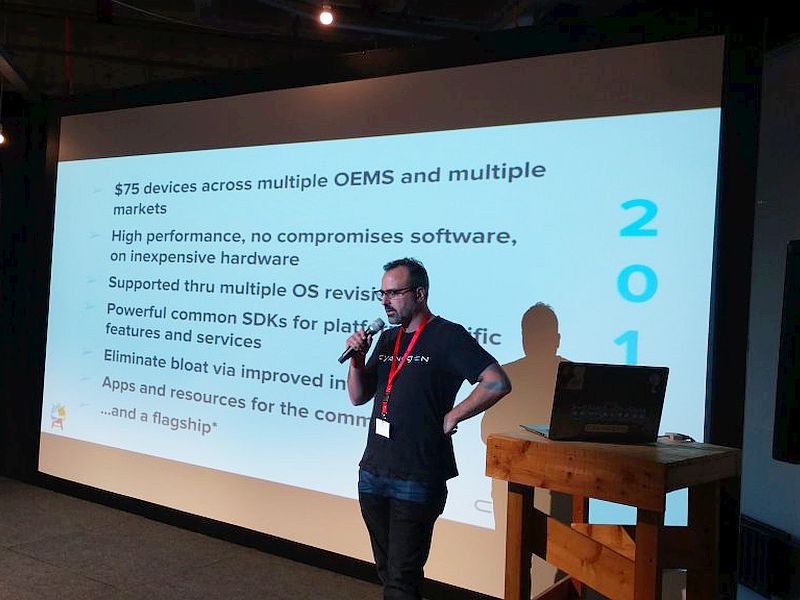
The company however has even bigger plans for 2016. Cyanogen Co-Founder and CTO Steve Kondik while speaking at Big Android BBQ Europe event detailed the company's plans for the next year. For devices, Cyanogen's focus centres around dirt-cheap phones priced at as low as $75 (approximately Rs. 5,000) and a flagship.

Some of the points Kondik discussed at the event include $75 devices across multiple OEMs and multiple markets; high performance, no compromise software on inexpensive hardware supported through multiple OS revisions; powerful common SDKs for platform with focus on apps; eliminating bloat via improved integrating apps and resources for the community, and a flagship.

During his keynote presentation, Kondik talked about the flagship with an asterisk marked on top of the word as the company didn't reveal any details about it.

Adding further, Kondik also hinted that CM13 based on Android 6.0 Marshmallow may be released in time for the holidays.

In other news, the company introduced Cyanogen Apps Package or C-Apps. The new apps package is targeted at CyanogenMod users who want to use features that are only available on devices running the commercial Cyanogen OS. Notably, C-Apps will require the latest version of CM 12.1 to run properly.

"Cyanogen OS includes a variety of apps and services that leverage CyanogenMod's open platform. As CM users, these apps were previously unavailable to you unless you bought a Cyanogen OS powered retail phone. Starting today, we're announcing the release of the Cyanogen Apps Package (C-Apps)," said the community in a blog post. C-Apps will be available offered as an optional download will not come preloaded on CyanogenMod releases, confirmed the company.

The company also listed the features that will come with the initial C-Apps Package. It includes Theme Chooser with per-app theming, Theme Store, AudioFX, Cyanogen Accounts, Gallery, Dialer with TrueCaller integration, and Email powered by Boxer.

Anyone can Hack your Android device with this Critical Vulnerability in Chrome

A security researcher has discovered a critical exploit in Chrome for Android which is capable of compromising virtually every version of Android smartphone and tablets running the latest Android.
Guang Gong  a security researcher from Quihoo 360 found the security vulnerability in Google’s Chrome browser for Android, which he recently presented during the MobilePwn2Own event at the PacSec security conference in Tokyo.
According to Gong, the vulnerability, if exploited, can allow the potential hacker to take the administrative control of the Android smartphone and install any malicious App or APK. While Gong has not made the inner workings of the exploit public, it is known that his vulnerability leverages JavaScript v8 to gain full administrative access to the victim’s phone.
According to Gong the bug is in the V8 JavaScript engine that comes packed with each Chrome installation. V8 is a JavaScript compiler written in C & C++, responsible for interpreting JS code fed into the browser, by converting it into machine code before executing it, gaining extra speed by doing so.
Gong demonstrated his PoC at PacSec where he used a regular Android smartphone to access a malicious link, which by leveraging the security exploit, installed another app on the phone, without any user interaction. Unlike similar Chrome exploits, the vulnerability discovered by Gong did not require chaining multiple bugs together to work or to gain root privileges.
“The impressive thing about Guang’s exploit is that it was one shot; most people these days have to exploit several vulnerabilities to get privileged access and load software without interaction,” PacSec organiser Dragos Ruiu told Vulture South. “As soon as the phone accessed the website the JavaScript v8 vulnerability in Chrome was used to install an arbitrary application (in this case a BMX Bike game) without any user interaction to demonstrate complete control of the phone.”
According to Register, Google security team immediately contacted Gong after his demonstration and rumors have it that the Chrome team is already getting a fix ready.  Gong may be eligible to receive an Android bug bounty reward for the vulnerability.

Thursday, 12 November 2015

Now you can try Firefox OS on your Android Smartphone using an App


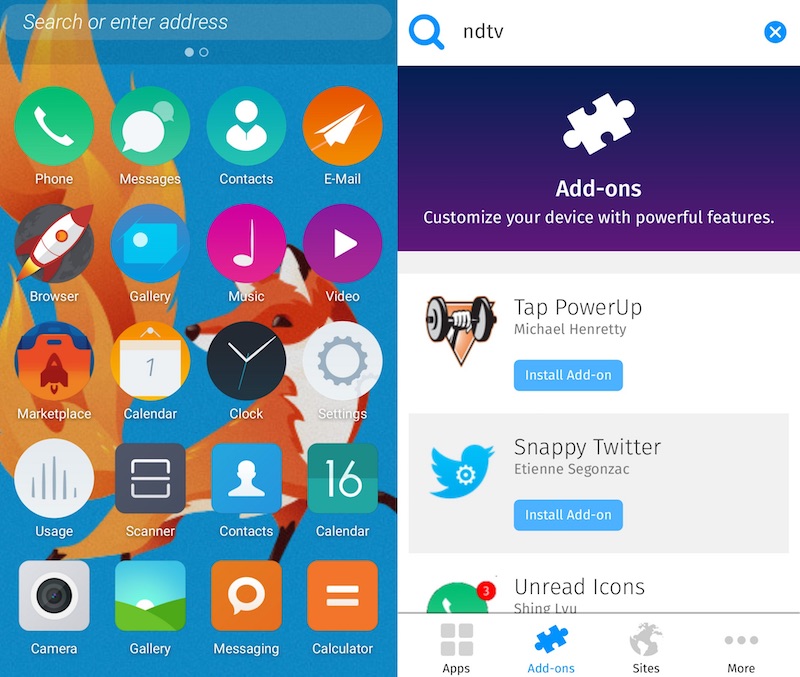
You can now try Firefox OS on your Android handset without flashing a ROM on your device. Mozilla has released a developer preview of its mobile operating system that can be installed on Android devices as an app.

Firefox OS 2.5 Developer Preview acts as an Android launcher that can replace one's current home screen to replicate Firefox OS' interface and bring additional features. Users also get access to Firefox's Marketplace from where they can download apps and add-ons.

Users also get access to the Firefox Browser, which comes loaded with many privacy-centric features including the ability to enable tracking protection from websites and advertisers. The browser also lets you pin shortcuts to the websites you like on the home screen - turning them into Web apps.

In our test, we observed that the app was slightly slow which is understandable as the app is in its preview phase. The app also seems to have been designed for an entry-level handset that presumably comes with a low-resolution screen. On our test Android device with FHD display, the icons and the interface in general appeared to be blown up. Even after making some adjustment in the settings, things still looked bloated.

For those unware, Firefox OS is an open-source, Linux-based mobile operating system meant for smartphones. The lightweight operating system uses open Web standards such as HTML5 and open Web APIs. It was first unveiled in February 2012, since then a handful OEMs have launched Firefox OS powered handsets, with India's Intex and Spice being some of the recent partners.

Over the years, the traction of Mozilla's mobile operating system has remained negligible. A ROM for Firefox OS has been available for quite some time, but it required users to manually flash their device and replace the existing Android software. The move to make it available as an app could give Firefox OS more exposure.

The installation file weighs around 90MB and is available for download from the company's website and not the Play Store.

Friday, 6 November 2015

Huawei launched G7 Plus with 5.5-inch Display, 13MP Camera, fingerprint sensor...


Further cementing its presence in the mid-range segment, Huawei has announced the launch of the G7 Plus in China. The handset is very similar to the Huawei G8 which the Chinese telecommunications launched at IFA 2015 in Berlin in September.

The metal-clad smartphone features a design similar to the iPhone, with antenna bands and speaker grilles looking strikingly similar. The Huawei G7 Plus is the logical successor to the last year's Huawei G7. The G7 Plus offers a substantial improvement over its predecessor with a higher resolution display and a more powerful processor among other differences. The smartphone is listed on the company's Thailand site and its official Vmall online store

As for the specifications, the Huawei G7 Plus sports a 5.5-inch IPS fullHD (1080x1920p) 2.5D display. It is powered by a octa-core Qualcomm MSM8939 SoC (1.2GHz quad-core + 1.5GHz quad-core) with 3GB of RAM. The handset also comes equipped with 32GB of inbuilt storage that can be expanded using a microSD card (up to 128GB). There's also a square shaped fingerprint sensor at the back.

Other features include a 13MP rear camera with autofocus and dual-tone flash, a 5MP sensor placed upfront, and a 3000mAh battery. The dual-SIM capable handset supports 4G LTE, 3G, Wi-Fi and other standard connectivity options. On the software side, the handset runs Android 5.1 Lollipop with Emotion UI 3.1 on top of it. The G7 Plus is priced equivalent of $330 (roughly Rs. 21,800). There's no word on its international availability as yet.

The handset is very similar to the G8. Not only do both the handsets look identical, they also offer similar specifications. The G7 Plus however also offers twice as much expandable storage capability at 128GB.